Increasing Entropy #5
Discoveries of the week, writing advice, generative UI, random links, and a few thoughts on random topics.
The good times in tech are over
A good reflection on how, for years, tech companies and engineers were allowed to do whatever they liked without thinking much about business and profits. Those days are over, says Sean Goedecke.
This post instantly reminded me of a chapter from The Infinity Machine, a biography of Demis Hassabis and a history of DeepMind. It tells the story of tension between Demis and DeepMind cofounder Mustafa Suleyman on one side and Google on the other, over DeepMind’s governance and an independent safety board for DeepMind.
My wife had to listen to my rant at midnight about the craziness of the situation of Google investing billions in DeepMind, DeepMind making no products and generating no profit, yet demanding that Google have no control over the results of its work.
Write Things
This week I read about writing.
Becoming a Better Writer — Gergely Orosz advocates for using your own voice and your own words in writing.
In his article, Gergely recommends the Writing Well Handbook. I haven’t read it yet, but I like how it looks.
Writing as a thinking tool — Why you should write in order to really understand things.
Jason Fried’s app for writing:
x.com/jasonfried/status/2105403067793584590/video/1
Build UI, Not Text Walls
Agents could do better than producing walls of text. They could build us a custom UI that presents data nicely and allows us to interact with it.
OpenUI — An open standard for generative UI.
A2UI — A protocol and SDK for dynamic UI.
As I understand it, they work similarly: the SDK generates a prompt that instructs models how to output UI. A model produces a UI description, which we then pass to the SDK for rendering. The instructions for models describe available components and how to combine them.
I’m not convinced that we need a standard or SDK for this. Models are good at writing HTML and building interactive JavaScript components. With good enough prompting, there’s no need to constrain ourselves to a limited set of building blocks. We could just let the model create things.
Visualize This — Amp’s implementation.
I believe that chat interfaces are highly overused nowadays. I think adding a chat to an app should be the last resort. It would be more magical to just create an interface that makes sense for the moment and evolves when a user interacts with it.
For example, imagine some kind of analytics or observability system. What if, instead of giving a user a chat where they ask questions about their data, we tried to predict what they want to see first based on what’s happening in the system at the moment? If a landing page used to bring in X sales a day and today it has already brought in 3X — we could show it right away. A chat could be a fallback.
* * *
Gemini 4 Carbon and Claude Fable 5.2 are out.
To show the models’ coding capabilities, the Gemini team generated a game with a pelican on a bicycle and a 3D scene with Three.js. The Claude team created an operating system and a browser game. Those are good demos, and the new OS looks extremely cool and interesting, but that’s so far away from my day-to-day work.
I would love to see details, some comparison of concrete code examples in real software. Something like “it used to write an endpoint handler like this, and now it more often decides to split view code from business logic”. I know it’s very nuanced, but maybe something like “when implementing a feature in curl, we used to get this result, and now we’re getting that result” could work?
We only get scores in benchmarks and have to develop our own feel for the models.
Gemini Decisions API — Google’s Jev, accepts audio and video as input.
* * *
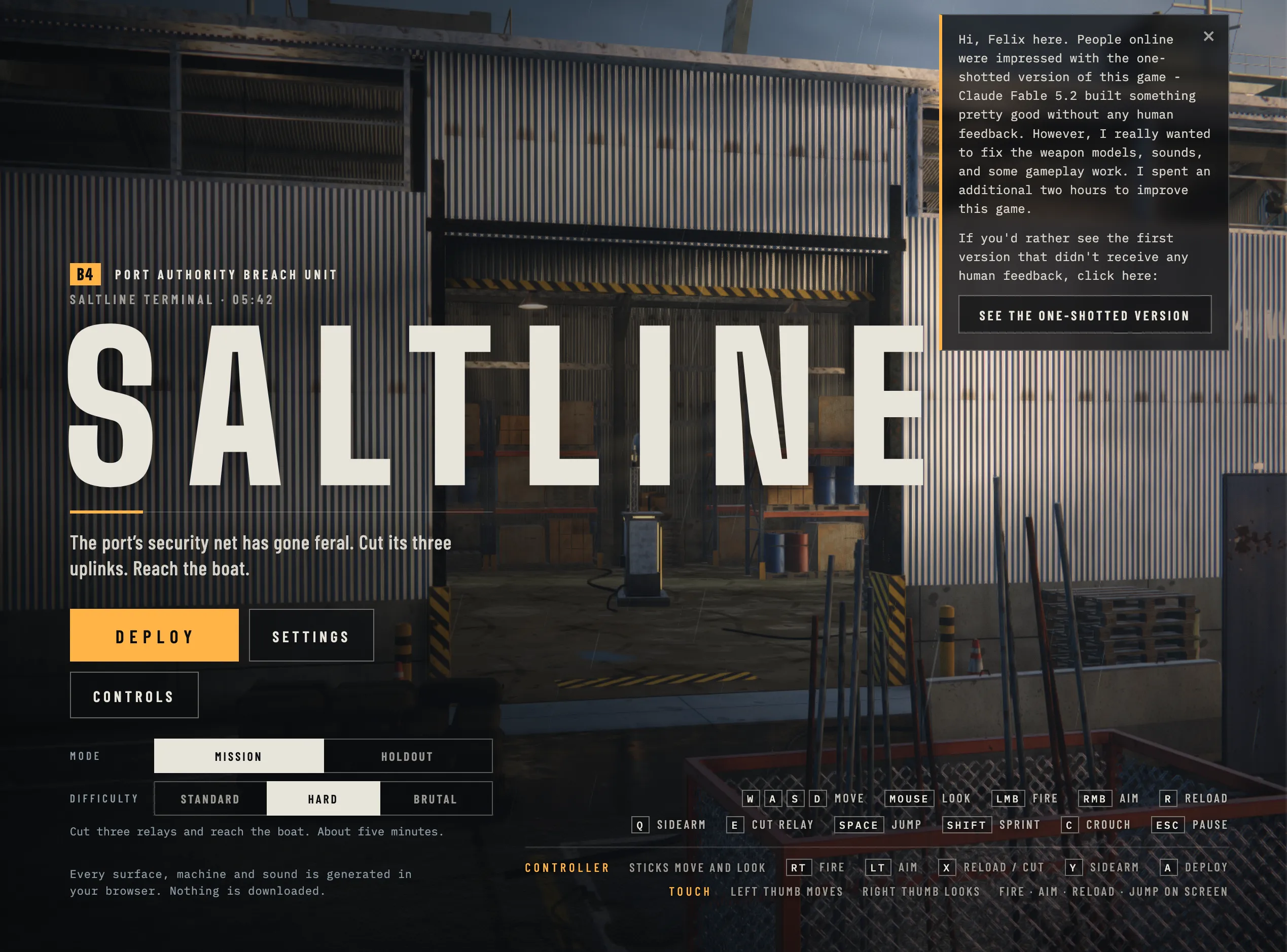
Felix Rieseberg from Anthropic tried to one-shot a first-person shooter game Saltline with Fable 5.2. It looks cool.
What struck me is how similar the menu looks to the one in a game I built with my kid. Same rectangular buttons, same bad text centering in rectangles that describe controls. They both have containers. And we built it with GPT-6 Astra, not an Anthropic model.
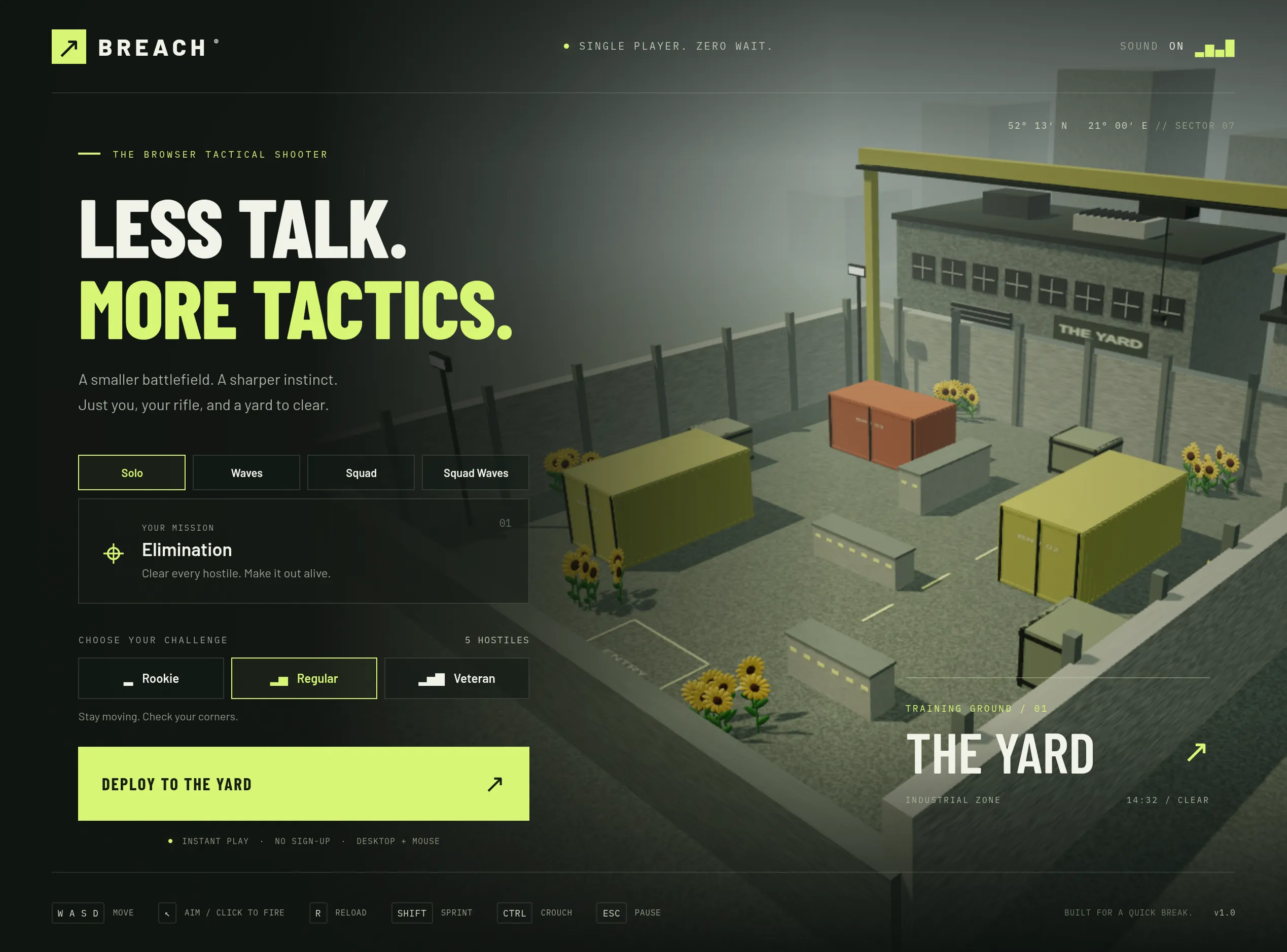
Our first prompt was:
Please create a game that I can play online in browser. I like counter strike so something similar would be good but simplier.
* * *
Shelf.design — Create screenshots of websites you like, and Shelf will organize them nicely and make them searchable and available to agents via MCP.